
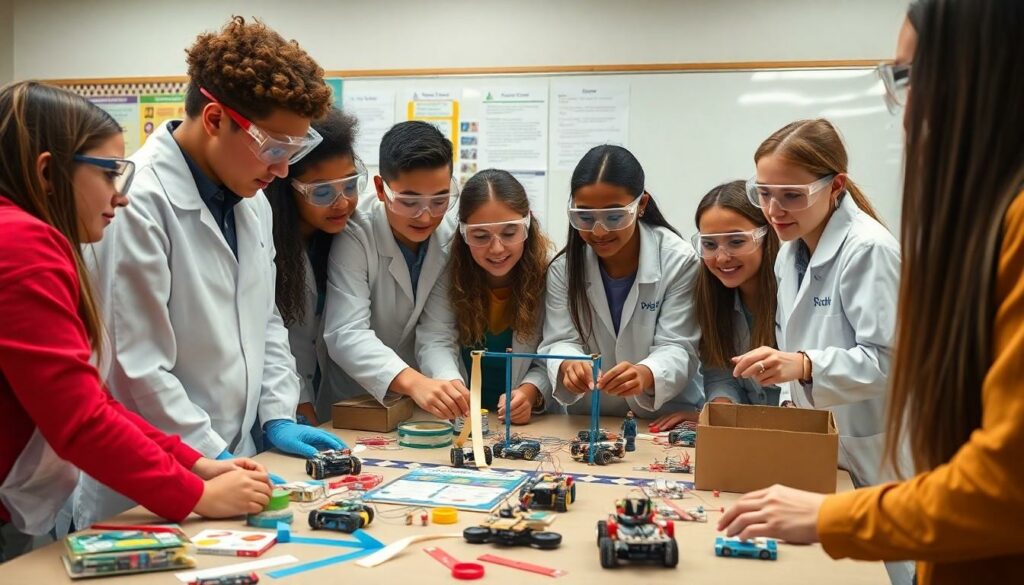
Middle school can be a wild ride, and when you throw STEM challenges into the mix, it’s like adding a rollercoaster to an already bumpy road. These challenges not only spark curiosity but also transform classrooms into epic battlegrounds of creativity and problem-solving. Imagine kids donning lab coats and safety goggles, ready to tackle real-world problems with nothing but their wits and a few basic supplies.
Overview of Middle School STEM Challenges
Middle school STEM challenges engage students in hands-on experiences that foster critical thinking. These challenges revolve around real-world problems, encouraging collaboration among peers. Projects often require students to develop innovative solutions using limited resources, simulating genuine engineering scenarios.
Typically, challenges include building structures to withstand natural forces or creating simple machines. Competitions may revolve around robotics, allowing students to design, build, and program robots to complete specific tasks. Others might involve coding projects that emphasize logic and sequential thinking.
Participation in these challenges cultivates essential skills. Communication, teamwork, and problem-solving abilities surface as students navigate obstacles together while implementing scientific principles. Engaging with STEM topics enhances students’ understanding of key concepts in physics, mathematics, and technology.
Teachers serve a crucial role in facilitating these challenges, guiding students through the process without giving away solutions. Monitoring progress helps ensure every student contributes, maximizing learning potential. Celebrating achievements reinforces the importance of perseverance and innovation.
Many educational organizations offer predetermined STEM challenges, providing a framework for educators. Resources like lesson plans and detailed instructions are accessible online, streamlining preparation for instructors. Schools also encourage local businesses to sponsor challenges, enhancing community involvement.
Integrating STEM challenges into the curriculum prepares students for future opportunities. Exposure to these activities not only ignites interest in STEM careers but also cultivates a growth mindset. Such practices create an environment conducive to exploration and creativity, allowing students to thrive in a rapidly evolving world.
Importance of STEM in Middle School

STEM challenges play a vital role in middle school education by fostering a culture of inquiry and engagement. These activities spark enthusiasm for science and technology among students, enhancing their academic experience.
Educational Benefits
Engagement in STEM challenges not only reinforces classroom learning but also enhances problem-solving abilities. Students grasp complex concepts more effectively through hands-on experiences. Practical applications turn abstract theories into relatable knowledge. Competitions and collaborative projects promote critical thinking skills. These challenges encourage students to learn from mistakes and refine their approaches. Exposure to real-world issues cultivates a sense of relevance in their education. Ultimately, the excitement around STEM leads to higher retention rates across subjects.
Skill Development
Involvement in STEM challenges supports the development of essential life skills. Students hone their communication abilities by sharing ideas and collaborating with peers. Teamwork becomes a fundamental aspect as they work together to solve problems. Critical thinking is sharpened as they analyze situations and develop effective strategies. Creativity flourishes through required exploration of innovative solutions. Adaptability becomes crucial as they encounter unforeseen challenges. Navigating these experiences lays a strong foundation for future academic and career pursuits.
Types of Middle School STEM Challenges
Middle school STEM challenges come in various forms that stimulate creativity and critical thinking. These challenges engage students practically and collaboratively.
Hands-On Projects
Hands-on projects form a core part of middle school STEM challenges. Students might construct bridges using limited materials such as straws and tape. They tackle design constraints while considering factors like weight and stability. Skills in engineering emerge as they experiment with different designs. Engaging in these projects encourages a deeper understanding of physics and engineering principles. Students often witness firsthand the outcomes of their designs, fostering a sense of accomplishment. Solutions derived from these projects illustrate the practical application of scientific concepts.
Competitions and Events
Competitions and events add a competitive edge to middle school STEM challenges. Robotics competitions encourage students to build and program robots capable of completing specific tasks. Events like science fairs allow students to showcase their innovative projects and discoveries. Participation in these activities cultivates team spirit, as students collaborate to develop solutions under time constraints. Noteworthy is the opportunity for networking with professionals in STEM fields during these events. Local businesses often sponsor competitions, enhancing community involvement and support for budding innovators. These experiences inspire students to explore future educational paths in science and technology.
How to Implement STEM Challenges
Implementing STEM challenges in middle school creates engaging learning experiences. Structured planning and organization streamline the process, ensuring activities run smoothly.
Planning and Organization
Preparation starts with defining the objectives of each challenge. Setting clear goals gives students a targeted focus. Identifying available timeframes helps in scheduling the activities effectively. Involving students in the planning phase encourages ownership and commitment. Establishing teams fosters collaboration, with each group tackling specific tasks. Communicating expectations clearly ensures all students understand their roles and responsibilities. Continually assessing progress allows for adjustments, maintaining momentum throughout the challenge.
Resources and Materials
Accessing appropriate resources and materials is vital for successful challenges. Compiling a list of necessary items, such as building supplies and tools, streamlines acquisition. Engaging local businesses or community organizations often provides additional support or sponsorship. Utilizing online resources enhances the variety of challenges and educational content available. Budgeting effectively ensures materials remain affordable, prioritizing cost-effective options.
Encouraging students to use recyclable materials fosters creativity and sustainability. Ensuring safety protocols are followed protects students during hands-on activities. Having backup supplies readily available mitigates potential issues during challenges.
Addressing Common Challenges
Middle school STEM challenges face common obstacles that can hinder student experience and learning. Addressing these challenges helps maintain enthusiasm and effectiveness in the program.
Student Engagement
Engagement remains crucial in middle school STEM challenges. Encouraging hands-on activities promotes excitement among students. Incorporating teamwork fosters a strong sense of community, allowing students to share ideas and learn from one another. Regularly switching up project types enhances interest and maintains focus. Integrating technology, such as coding platforms or simulation tools, offers additional interactive options. Teachers can also provide timely feedback to keep engagement high and motivate students.
Resource Limitations
Resource limitations often pose challenges during STEM activities. Acquiring necessary materials sometimes presents hurdles for schools. Collaborating with local businesses for sponsorship can alleviate these constraints. Utilizing recycled materials encourages creativity and sustainability in projects. Planning ahead permits schools to maximize available resources effectively. Creating a resource-sharing network among schools can also support better access to materials. Hosting community events can garner additional support and increased resource availability.
Conclusion
Middle school STEM challenges offer invaluable experiences that shape students’ academic journeys. By engaging in hands-on projects and competitions, students not only enhance their understanding of complex concepts but also develop essential life skills. The collaborative nature of these challenges fosters teamwork and communication while igniting a passion for science and technology.
As educators and communities invest in these programs, they create vibrant learning environments that prepare students for future success. Encouraging participation in STEM challenges ignites curiosity and fosters a growth mindset, ultimately leading to higher retention rates and a deeper appreciation for STEM fields. These experiences lay the groundwork for a generation ready to tackle the challenges of tomorrow.